How to Build a Meditation Habit: The 2-Minute Daily Routine That Sticks
Start a meditation habit in 2 minutes a day. Science-backed guide for beginners — reduces stress, sharpens focus, and builds a practice you'll actually keep.
You know meditation is good for you — reduced stress, better focus, improved emotional regulation. And yet every time you try, the same thing happens: you sit down, close your eyes, your mind races for three minutes, and you quietly decide this isn’t for you.
You’re not alone. Research published in the journal Mindfulness found that roughly 70% of American adults haven’t even considered starting a meditation practice, let alone maintained one. Of those who try, a 2021 study on meditation dropout found 67% of quitters cited “feeling like they were failing” as the reason — not lack of time.
Here’s the reframe: meditation isn’t a talent you either have or don’t. It’s a habit, and it follows the same predictable patterns of formation as any other. Most habits have immediate feedback — exercise gives you endorphins, water quenches thirst. Meditation’s benefits are real but subtle, which creates a “delayed reward” problem: the effort is now, the payoff is later. There’s also a paradox: you’re trying to do something that is, essentially, nothing. In a culture that equates busyness with productivity, that feels deeply uncomfortable. If meditation feels hard at first, that’s not a sign you’re bad at it — it’s a sign you’re human. And the momentum is real: roughly 275 million people meditate worldwide today, with about 15% of adults in the U.S. and UK practicing regularly.
The Two-Minute Starting Point
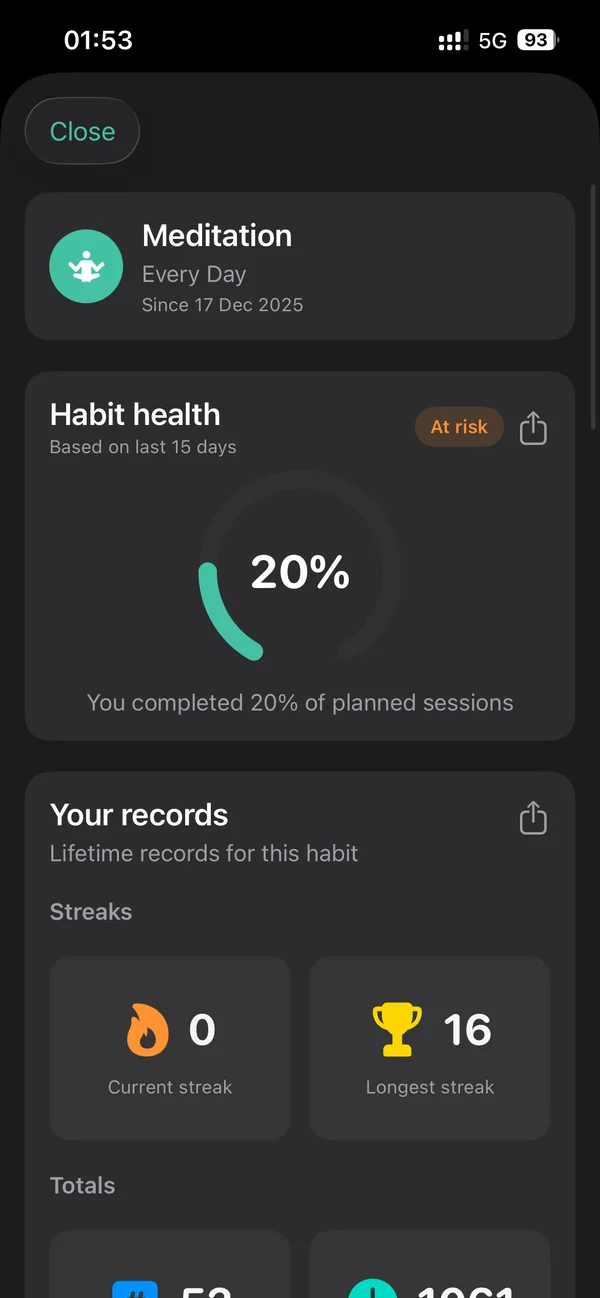
The single most effective strategy for building a meditation habit is making it absurdly small. Not 20 minutes. Not 10. Start with two.
This isn’t a motivational trick — it’s grounded in behavior science. BJ Fogg’s research at Stanford on “tiny habits” shows the biggest predictor of long-term success isn’t the intensity of the behavior but the consistency of doing it. A two-minute meditation done every day for a month builds more neural reinforcement than a 30-minute session done sporadically. Stanford research also found that habit stacking — attaching a new behavior to an existing one — increases adherence by 47% compared to time-based reminders.
Two minutes also eliminates the most common excuse: “I don’t have time.” Everyone has two minutes — between waking up and checking your phone, between parking the car and walking into the office, between brushing your teeth and getting into bed.
Here’s your first session: sit comfortably, close your eyes or soften your gaze, take one deep breath to signal the start, then simply breathe normally, placing your attention on the physical sensation of each breath. Your mind will wander, probably within 10 seconds. That’s not failure — that’s the entire practice. Each time you notice your attention has drifted and bring it back, you’ve completed one “rep” of mental training.
Anchor It to Something You Already Do
A meditation habit floating in the abstract — “I should meditate sometime today” — almost never survives past the first week. You need to attach it to an existing behavior.
This technique, called habit stacking, leverages neural pathways your brain has already built. The formula: after [current habit], I will [new habit].
Morning anchor: After you pour your coffee (but before you drink it), sit down and meditate for two minutes. The coffee acts as both trigger and reward. Morning meditation has the strongest track record for habit formation because it happens before the day’s demands pile up.
Commute anchor: After you park at work, sit in silence for two minutes before getting out — you’re already sitting, and the transition creates a natural pause.
Evening anchor: After you brush your teeth at night, sit on the edge of your bed and meditate before lying down. Bonus: meditation before sleep activates the parasympathetic nervous system and has been shown to improve sleep quality.
The specific anchor matters less than its consistency. Research on meditation app users found that practicing at the same time every day was one of the strongest predictors of long-term persistence.
Choose Your Meditation Style
Not all meditation is the same, and the right technique depends on your personality and what frustrates you least as a beginner.
| Technique | Best For | How It Works | Beginner Difficulty |
|---|---|---|---|
| Breath Focus | General stress relief, attention training | Focus on the sensation of breathing; redirect attention when mind wanders | Easy |
| Body Scan | Physical tension, insomnia, anxiety | Slowly move attention through each body part, noticing sensations | Easy |
| Counting Breaths | Restless minds, those who need structure | Count each exhale from 1 to 10, restart when you lose count | Easy |
| Guided Meditation | Complete beginners, those who overthink | Follow audio instructions from a teacher or app | Easiest |
| Loving-Kindness (Metta) | Emotional regulation, self-compassion | Repeat phrases of goodwill toward yourself and others | Moderate |
| Walking Meditation | People who can’t sit still, physical types | Walk slowly and deliberately, focusing on each step’s sensation | Moderate |
| Visualization | Goal-oriented people, creative thinkers | Imagine a peaceful scene or visualize positive outcomes | Moderate |
| Open Awareness | Experienced beginners (1+ months) | Observe all thoughts, sounds, sensations without focusing on any | Harder |
For total beginners: start with breath focus or counting breaths for weeks 1–3. If pure breath focus feels too abstract, switch to guided meditation — there are thousands of free sessions ranging from 2 to 30 minutes. After your first month, experiment with body scan and loving-kindness to see what resonates.
Common Mistakes That Kill a Meditation Habit
Understanding why habits fail helps you avoid the pitfalls that derail most beginner practices:
Starting too ambitious. Committing to 20 minutes daily when you’ve never meditated is the fastest path to quitting. Start with 2 minutes. Seriously.
Expecting immediate calm. Meditation isn’t a relaxation technique (though relaxation often follows) — it’s attention training. This is the number one beginner misconception: that meditation means clearing your mind. It doesn’t. A session where your mind raced and you kept redirecting attention might be more valuable than one where you felt calm, because you got more reps of the actual skill: noticing, then returning. If your mind won’t stop racing, try counting each exhale from 1 to 10 (restart when you lose count) or a body scan — both give your mind a small task to hold onto, which reduces the “aimlessness” that trips up beginners.
Not having a specific trigger. “I’ll meditate when I have time” means you’ll never meditate. Attach it to a specific existing behavior, at a specific time, in a specific place — habit stacking isn’t optional for meditation, it’s essential.
Meditating in a distracting environment. You don’t need a meditation room, but you do need a spot where you won’t be interrupted for two minutes.
Quitting after one missed day. Missing a day doesn’t erase your progress; missing a week might. Adopt the “never miss twice” rule.
Trying to “stop thinking.” Your brain generates thoughts — that’s its job. Meditation is noticing thoughts without following them, not eliminating them. Even experienced meditators have busy-mind sessions.
The Progression Path: From 2 Minutes to 15
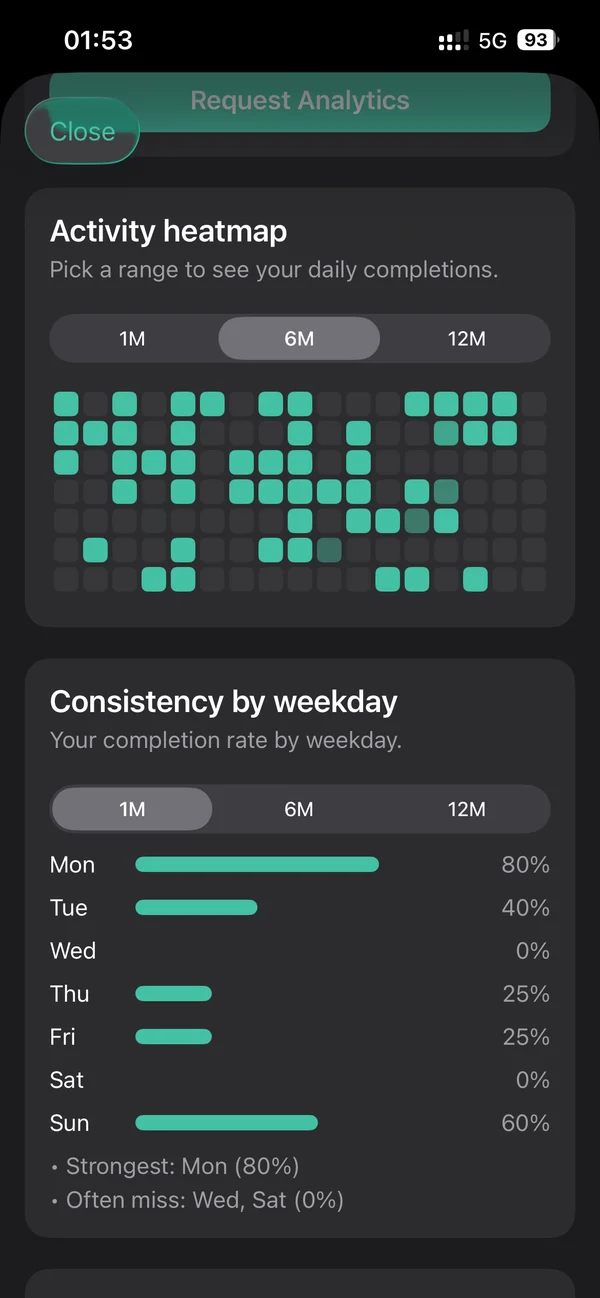
Once your two-minute practice feels normal — something you’d feel weird skipping — it’s time to grow. This typically happens after 2–3 weeks of daily practice, though the timeline varies from person to person.
Weeks 1–2: 2 minutes daily. The goal is pure consistency — no judging “quality.”
Weeks 3–4: 5 minutes daily. You may notice moments of genuine stillness between the mind-wandering.
Weeks 5–8: 10 minutes daily. Research suggests 10 minutes is the minimum effective dose for measurable stress reduction and attention improvement.
Months 3+: 15–20 minutes daily — the range where studies show the most robust benefits, including reduced cortisol and structural changes in brain regions tied to self-awareness.
Never increase duration faster than feels comfortable. Progress isn’t measured by session length — it’s measured by how many days in a row you showed up. The psychology behind why streaks work is well documented: visible progress creates its own motivation.
Handling Missed Days Without Quitting
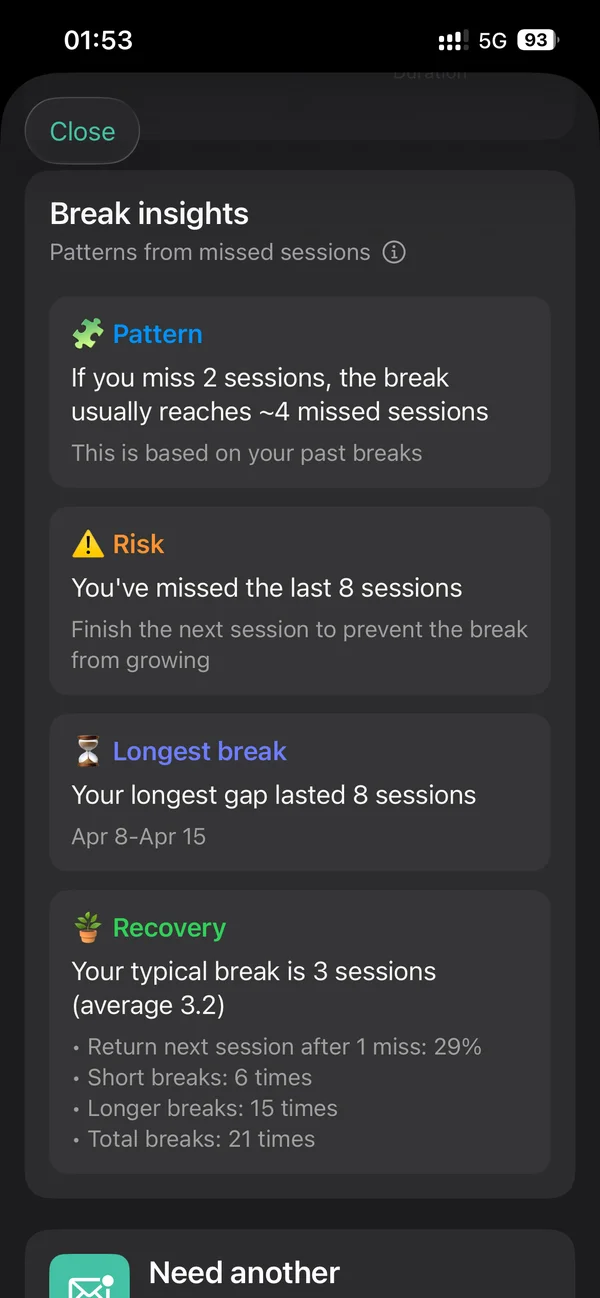
You will miss days — a sick child, an early flight, a morning you simply forget. The question isn’t whether you’ll break your streak, but what happens after. This is where most meditation habits die: one missed day leads to two, which leads to a week, which leads to “I tried meditation and it didn’t work.”
The fix: adopt a “never miss twice” rule. Miss Monday? Fine. Tuesday is non-negotiable.
Have a minimum viable meditation. Your regular practice might be 10 minutes, but your “busy day” version is 1 minute. Keeping the threshold nearly impossible to skip maintains the habit chain even on terrible days.
Remove the shame. Self-criticism after a lapse makes you more likely to quit, not less. Treat yourself the way you’d treat a friend who missed a workout.
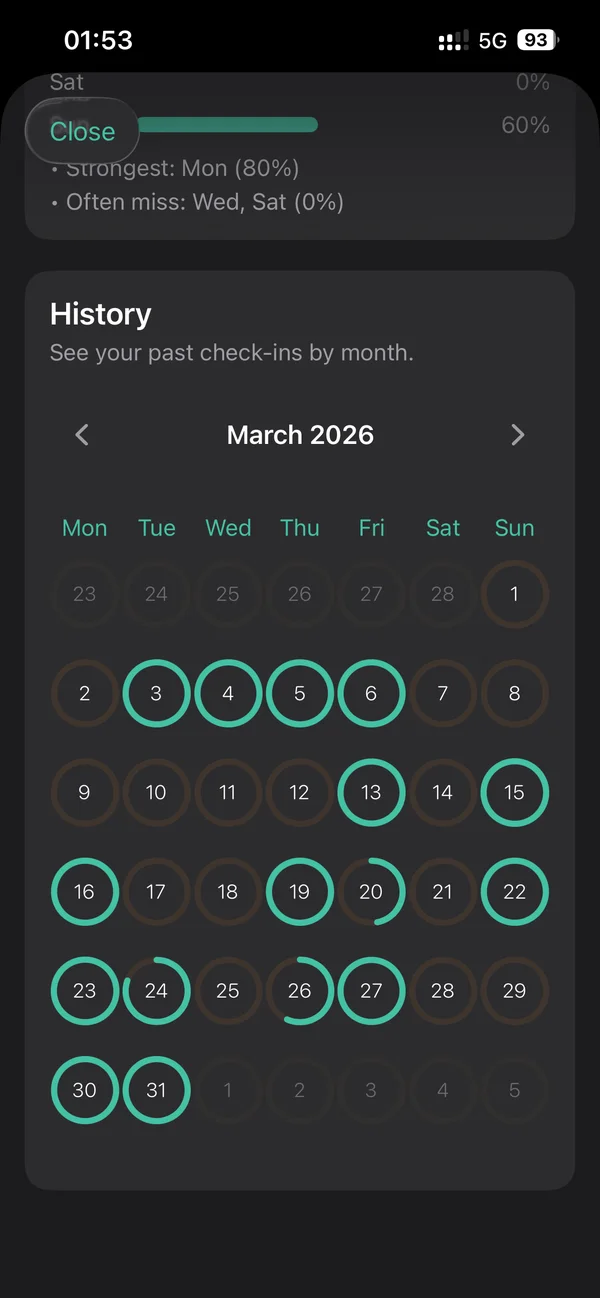
Track it. Whether it’s a checkmark in a journal or a habit tracking app, recording your daily meditation creates accountability and makes your streak visible — which motivates you to protect it. Even a free habit tracker can be the difference between a practice that lasts a week and one that becomes part of who you are.
Making It Stick: A 30-Day Action Plan
Days 1–7: Establish the trigger. Pick your anchor habit, set a timer for 2 minutes, sit, breathe. The only goal is doing it 7 days straight. Don’t judge the quality.
Days 8–14: Build the ritual. Add a small ceremony — same cushion, a candle, phone in another room. After 7–10 days in the same spot, just sitting there starts to trigger calm through classical conditioning. Increase to 3–4 minutes if it feels natural.
Days 15–21: Extend gradually. Move to 5 minutes. You might notice a pause before reacting in a stressful meeting, or an easier time falling asleep — your first tangible rewards.
Days 22–30: Solidify the identity. By now you’re not just someone who meditates — you’re a meditator. Identity-based habits are the strongest kind because they’re tied to who you believe you are, not just what you do. Move to 7–10 minutes if it feels right.
After 30 days, you’ll have a foundation strong enough to sustain itself: the trigger reminds you, the routine is familiar, and the reward — even if subtle — is real. From here, growth happens naturally.
Frequently Asked Questions
How long does it take to form a meditation habit?
Research suggests habit formation takes anywhere from 18 to 254 days, with an average of 66 days. For meditation specifically, most people report it feeling “automatic” after 3 to 4 weeks of daily practice — but this assumes you start small (2 minutes) and attach it to an existing behavior. Read more about how long it takes to form a habit.
Can meditation replace therapy or medication?
No. Meditation is a complementary practice, not a replacement for professional mental health treatment. It can reduce symptoms of anxiety and depression, but if you’re dealing with clinical conditions, work with a mental health professional.
Is it better to meditate in the morning or at night?
Morning meditation has the strongest track record for habit formation because you’re less likely to skip it due to daily demands. Evening meditation has unique benefits for sleep quality. The best time is whichever time you can do consistently.
What if I fall asleep during meditation?
Falling asleep means your body needs rest — it’s not a failure. If it happens often, try meditating earlier in the day, sitting upright instead of lying down, or keeping your eyes slightly open with a soft downward gaze.
How do I know if meditation is “working”?
The first signs are usually noticed by other people: you’re calmer in conversations, you react less impulsively. Personal signs include better sleep, improved focus, and a subtle sense of spaciousness. Research shows measurable brain changes after 8 weeks.
Do I need an app to meditate?
No. You need a timer and a quiet spot. Apps can help with guided sessions and tracking consistency, but they’re optional. The most important tool for maintaining a meditation habit is a way to track your daily practice — whether that’s an app, a journal, or a calendar on your wall.
Start Today, Not Monday
The most common meditation mistake isn’t poor technique or wrong posture. It’s waiting — for the right moment, the right app, the right level of stress that finally justifies sitting in silence.
The right moment is now. Set a timer for two minutes. Sit. Breathe. Notice your thoughts. Bring your attention back. That’s meditation. Everything else — the apps, the retreats, the techniques — are refinements of this simple practice.
Two minutes. Today. That’s all it takes to start.
If tracking your meditation streak and building it alongside other healthy habits sounds useful, EasyHabits can help you maintain that daily consistency with gentle reminders and visual progress tracking — including a built-in timer perfect for meditation sessions. Set your duration, track your streak, and celebrate every checkpoint along the way.